Comparisons
No-subscription shipping software: what does it really cost?
Monthly plans, per-label fees, hidden surcharges… Let’s untangle the real cost of shipping software and what “no subscription” actually means.
When comparing shipping software, the advertised price only tells part of the story. Between the subscription, per-label fees, paid add-ons and carrier surcharges, the real cost can be very different from what you expected. Here’s how to work out what you actually pay.
What are the most common pricing models?
- Monthly subscription: a fixed amount every month, often tiered by number of shipments or users.
- Per-label fees: a small amount added to each shipment, on top of the carrier rate.
- Hybrid model: a base subscription, then extra fees beyond a certain volume.
- Pay per shipment: no fixed fees, you pay only for shipping each parcel.
Where do subscription costs hide?
A monthly subscription is due whether you ship 500 parcels or none. For a seasonal or early-stage business, quiet months cost as much as busy ones. On top of that, you’ll often find:
- Tiers that push you into a higher plan as soon as your volume grows.
- Essential features (ecommerce integrations, extra users, reports) locked behind pricier plans.
- Setup or integration fees billed separately.
- Annual commitments that are hard to cancel.
How do you calculate the real cost per parcel?
The formula is simple: add up all the month’s fixed fees (subscription, add-ons, users), divide by the number of parcels shipped, then add the average shipping rate per parcel. A subscription that looks affordable can add several dollars per shipment for a small business that ships little.
Run the numbers over three different months, including a quiet one: that’s where the gap between a subscription and pay-per-shipment shows most clearly.
Does “no subscription” mean “free”?
Not exactly: you still pay to ship your parcels. The real question is whether the displayed rate is complete. Some tools advertise a low price, then add fuel, residential or remote-area surcharges when the invoice arrives.
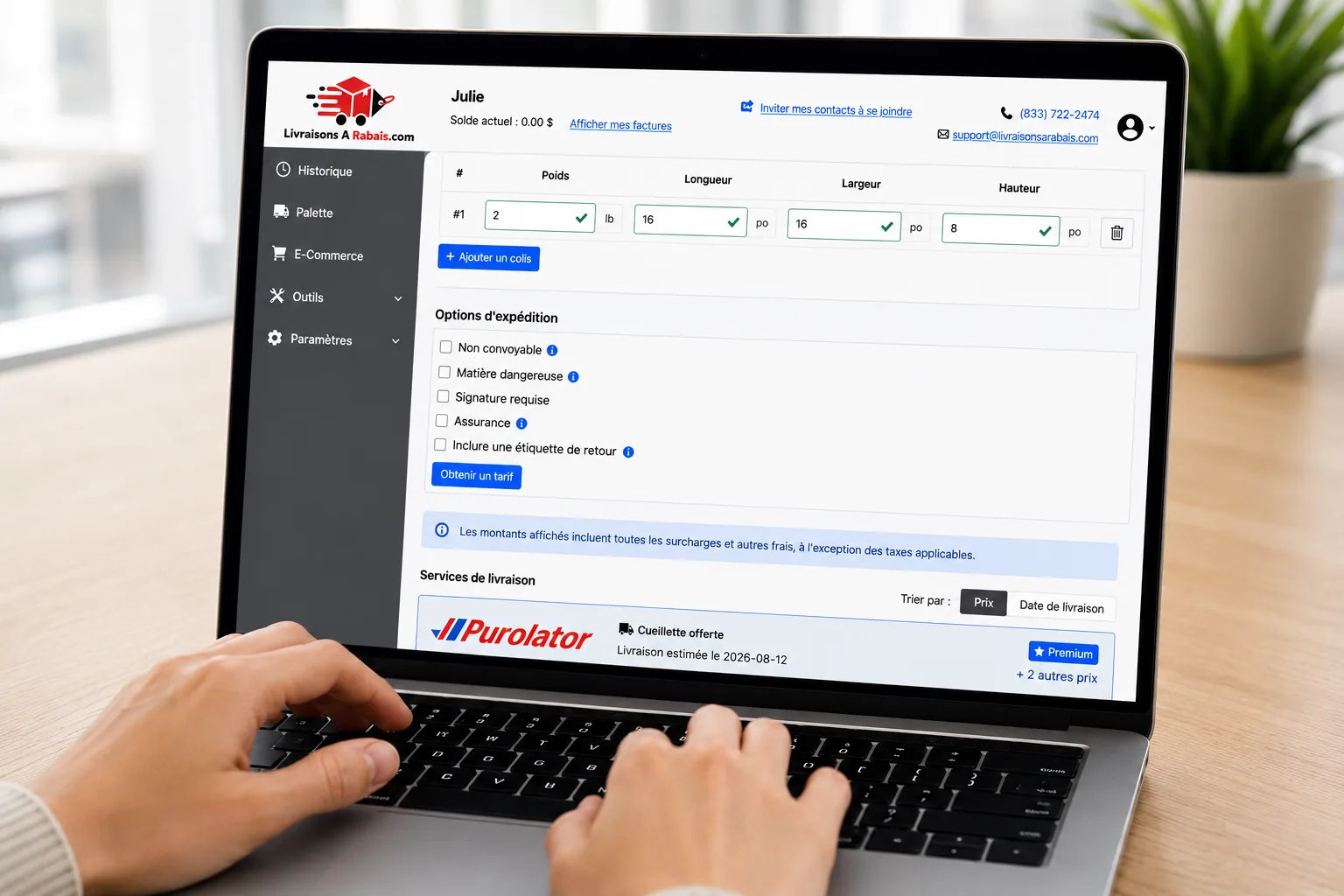
At LAR Shipping, the amounts shown in the customer portal include all surcharges and other fees, except applicable taxes. The price you see before printing the label is the price you pay.
What does a no-subscription service like ours include?
- Free sign-up, with no contract or minimum volume.
- Real-time comparison of more than a dozen carriers.
- Negotiated rates thanks to the pooled volume of over 8,000 clients, with savings of up to 70%.
- Labels, tracking and pickups in a single portal.
- $100 of basic insurance included on every parcel.
- Human customer service, in English or French.
Which model should a small business choose?
If your volume varies from month to month, or you ship fewer than a few hundred parcels a month, paying per shipment is almost always the better deal. You pay only for what you use, and every dollar saved on shipping stays in your margin instead of going toward covering a subscription.
Want to cut your shipping costs? Compare more than a dozen carriers with LAR Shipping and save up to 70% on your shipments.